District 11 · Poblats Marítims (Poblados Marítimos)
Renovating a home in Poblats Marítims
Poblats Marítims includes El Grau, El Cabanyal-El Canyamelar, La Malva-rosa, Beteró and Natzaret. The Cabanyal historic ensemble and the Atarazanas have different protected records; a renovation should establish the relevant site, building and permitted use before settling its design.
At a glance
Municipal data for 2025. These figures describe the district, not the condition of an individual property.
- District 11: 5 barrios
- El Grau, El Cabanyal-El Canyamelar, La Malva-rosa, Beteró, Natzaret. These are administrative neighbourhoods; protection boundaries need a separate address check.[3]
- Recorded construction age
- The 2025 municipal report records 21,839 of 30,408 dwellings in construction-age bands ending in 1980: 71.8%. This is not a survey of their present condition.[1]
- Homes recorded after 1980
- The same cadastral table records 8,569 dwellings in the later construction-age bands. An older district can therefore contain very different buildings; identify the particular block before specifying work.[1]
- The Cabanyal ensemble has a mapped boundary
- The structural catalogue identifies the original Cabanyal expansion as a BIC historic ensemble, with a recorded area of 28.54 hectares. This mapped heritage area is not the same as the entire district.[4]
- The Atarazanas are a separate monument
- The Atarazanas at Plaza Juan Antonio Benlliure 1–5, El Grau, have their own BIC monument entry. Proposals in the relevant setting require that individual record as well as general planning checks.[5]
Establish which coastal-city setting applies
The municipal catalogue maps the original Cabanyal expansion as a historic ensemble and records the Atarazanas as a separate monument in El Grau. These entries are useful starting points for an owner, but they do not replace the current special-plan documents, property catalogue and address-specific permission assessment. A house in El Cabanyal-El Canyamelar and an apartment in Natzaret cannot be assigned the same rules simply because both are in Poblats Marítims.
La Malva-rosa and Beteró are also distinct barrios within district 11. Include the exact address, current use and proposed work when requesting advice. If the project depends on tourist accommodation or another change of use, establish its planning and licensing position before treating the income or conversion as feasible. An interior renovation quotation does not establish permission for a different use.
Document the façade before choosing a treatment
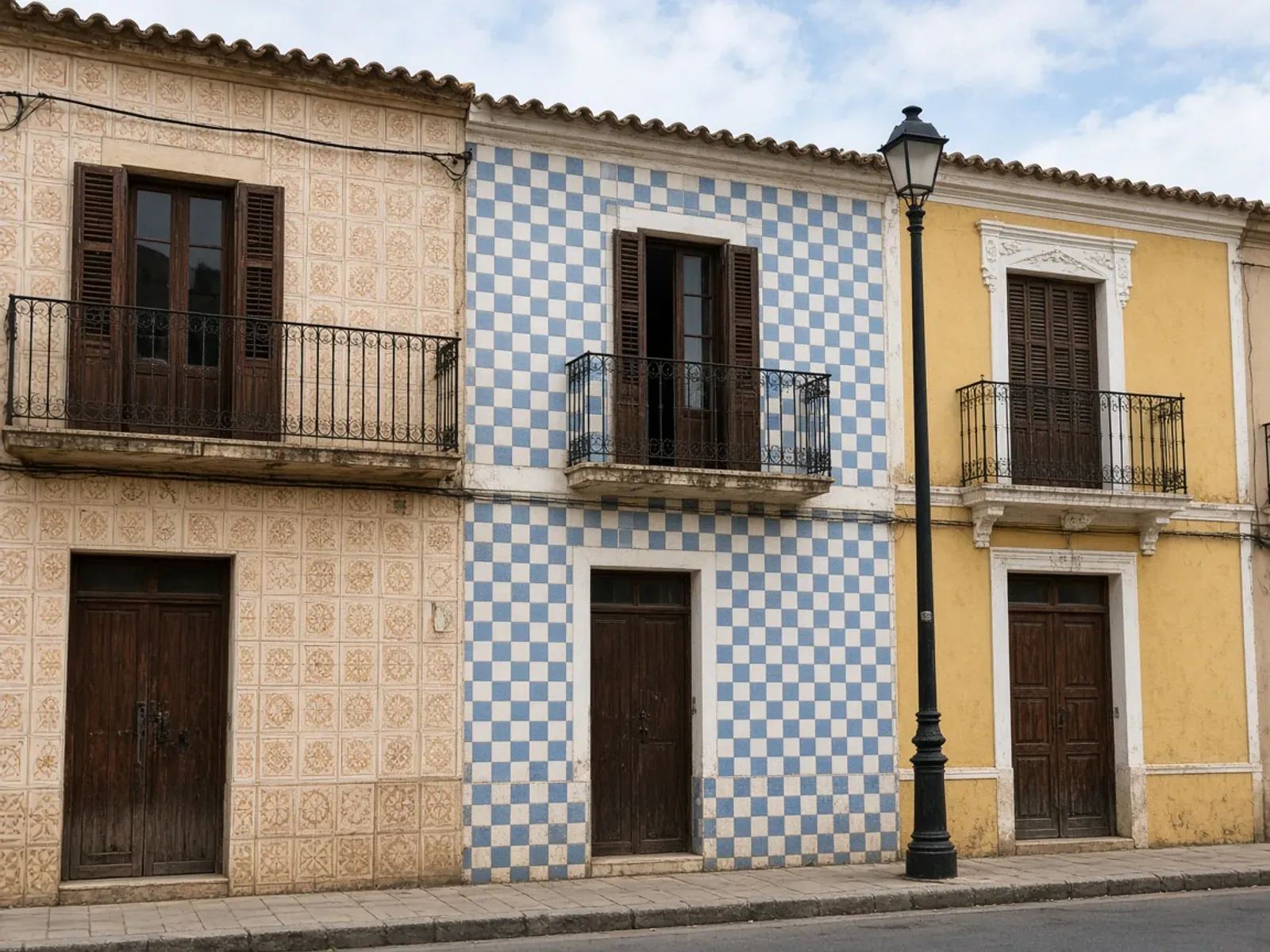
Where a house or building has distinctive cladding, decorative work, original joinery or a protected frontage, record its condition and the proposed intervention. Establish which elements the property record requires to be retained. Cleaning, repair, replacement and alteration are different operations; the specification should distinguish them rather than treating the elevation as a single decorative surface.
If the owner wants better thermal performance, compare options compatible with the permitted exterior appearance. The design may need to consider shutters, frame profiles, glazing and the relationship between the window and its opening. Avoid ordering a standard replacement before those details are checked. For external equipment, show its position and service routes so any visual or technical conflict can be resolved during design.
Investigate moisture without assuming a cause
A coastal district name does not diagnose damp, corrosion or salt contamination in an individual home. The survey should establish what is actually observed and what further testing or opening up is needed. Record whether moisture relates to rainfall, plumbing use, ground contact or internal conditions. Repairs and material choices should follow that evidence.
For a house, coordinate roof and external-envelope repairs with internal work that depends on a dry building. For an apartment, establish whether a leak or damaged element belongs to a common part. Repainting a ceiling before the source is addressed is not a complete repair. Where different owners or insurers are involved, separate responsibilities and keep a record of the agreed scope.
Plan around the actual construction
The 2025 municipal report records 30,408 dwellings in Poblats Marítims, including 21,839 in construction-age bands ending in 1980. That is 71.8%, leaving 8,569 in later bands. The figures demonstrate variety; they do not prove that a wall is structural or a pipe is original.
Measure the existing arrangement and compare it with available plans. Establish floor levels, drainage connections and the route of any new kitchen or bathroom services. If opening up the living space requires structural work, obtain the appropriate assessment before fixing the demolition package. Keep alternatives available: a different doorway, furniture arrangement or service position may meet the brief with a more manageable intervention.
Make the renovation record as clear as the design
The appointment can bring together architecture, interior design, structural coordination, permissions and the construction trades. Agree which technical professionals are required and who signs each relevant document. The works programme should include access, waste handling, protection of retained elements and any dependency on a community or neighbouring property.
At handover, retain photographs of restored features and important concealed work, relevant installation documents and instructions for materials needing particular maintenance. Record variations from the original design and any outstanding items. A properly documented refurbishment helps the next owner understand both the improvements and the protected elements that remain part of this home.
Your questions, answered
Is every property in Poblats Marítims within the Cabanyal BIC?
No. The historic ensemble has a mapped boundary, and the district includes five barrios. Check that boundary, the current special plan and the building's own entry for the exact address.
Can a tiled façade be replaced during a house renovation?
Establish whether the tiles or frontage are protected and assess their condition before specifying removal. A conservation or repair option may be required or preferred. The proposed treatment should be documented and included in the relevant submission.
Does a seaside location explain every damp problem?
No. Water ingress, leaks, ground moisture and internal condensation require different investigations and repairs. The specification should follow the observed cause rather than a general assumption about the coastal setting.
Does renovating a house authorise tourist letting?
No. The building work and proposed use require their own checks. Establish current planning, tourism and community requirements where relevant before relying on a tourist-accommodation proposal.
Sources
- Municipal district 11 report 2025: population sections 1.3/1.8 and cadastral housing age section 5.1 (page 19). Ajuntament de València, Oficina de Estadística. Checked 31 October 2026.
- Official municipal districts and barrios map (19 districts, 87 barrios). Ajuntament de València, Oficina de Estadística. Checked 31 October 2026.
- Official neighbourhood boundary dataset: 88 features, 87 distinct district-neighbourhood codes (175 has two polygons). Ajuntament de València, Geoportal. Checked 31 October 2026.
- Municipal structural heritage catalogue: 11-01 Área Cabañal Núcleo Original del Ensanche del Cabañal. Ajuntament de València, Urbanisme. Checked 31 October 2026.
- Municipal structural heritage catalogue: 11-02 Atarazanas. Ajuntament de València, Urbanisme. Checked 31 October 2026.